
Education
Community Reading and Learning Culture Strategy: From Classroom Requirement to Shared Identity
A long-term strategy for building reading culture across schools, homes, and community spaces to improve learning outcomes and confidence.
Kenford Trust approaches reading as a shared cultural practice, not just an academic requirement. In many communities, children learn to read for exams, but not for understanding, curiosity, or expression. Over time, this limits confidence and weakens long-term learning. The challenge is not the ability to read words. It is the absence of an environment where reading is part of daily life.
This work focuses on restoring reading as something natural and engaging. When learners encounter books that reflect their experiences and interests, reading becomes meaningful. When reading is visible at home, in school, and in community spaces, it becomes consistent rather than occasional.
The starting point is understanding how learners experience reading today. Some associate it with pressure and performance. Others disengage because materials feel distant from their reality. In many homes, caregivers want to help but feel unqualified due to their own educational background. These realities shape how support is designed.
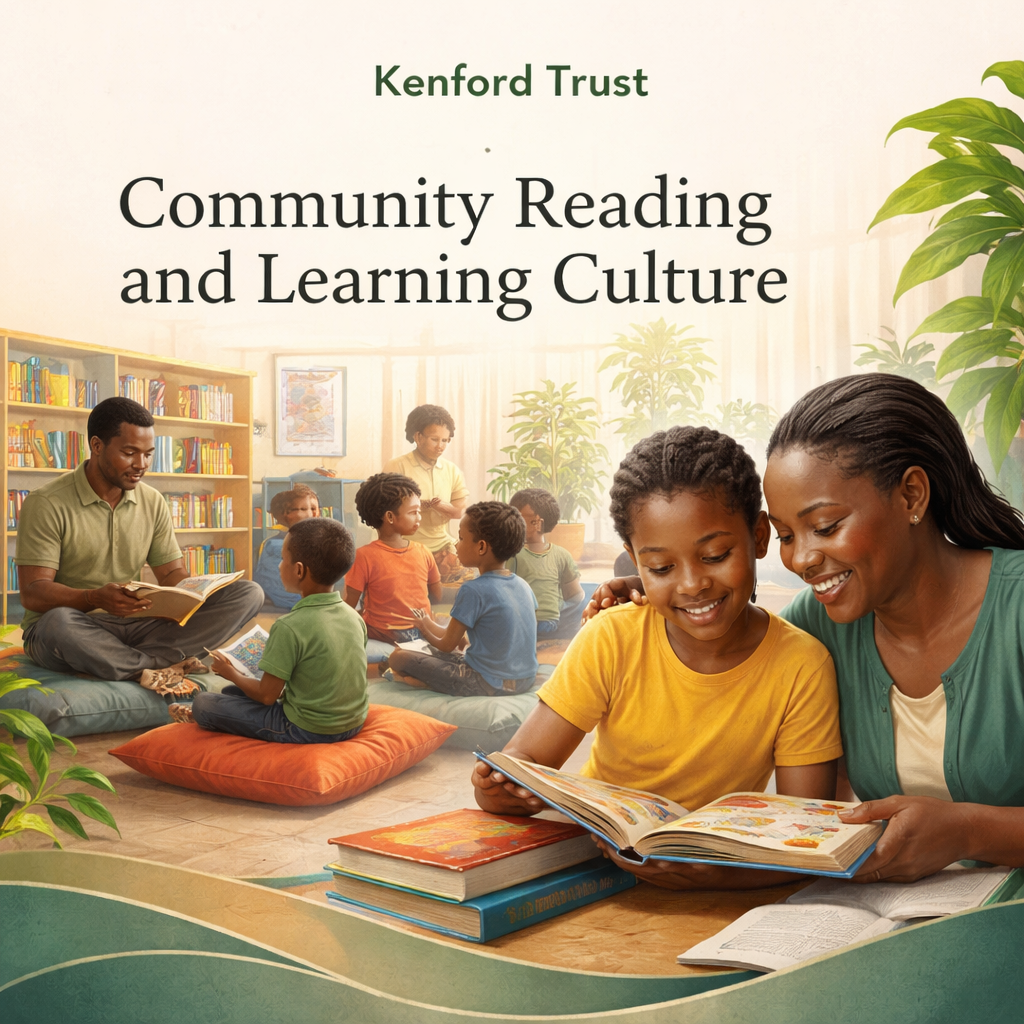
Reading culture grows when it is shared. Schools remain central, but they are not enough on their own. Community groups, mentors, and local spaces extend access and reinforce habits. A reading corner in a community center or a simple storytelling session can have as much impact as a formal lesson when it is consistent.
Caregivers play a critical role, even without formal training. Simple practices such as listening, asking questions, or discussing stories create strong learning moments. When these actions are normalized, support becomes practical and accessible rather than intimidating.
Access to relevant materials is equally important. Learners engage more when they see themselves in what they read. Local stories, familiar settings, and culturally relevant content strengthen connection and interest. Without this, reading can feel disconnected and lose its appeal.
Within schools, reading must go beyond language classes. When teachers integrate reading into different subjects, learners begin to use it as a tool for understanding rather than as a separate task. This shift improves comprehension and confidence across all areas of learning.
The system is built around simple, repeatable routines. Reading sessions, group discussions, and reflection activities create structure without complexity. Over time, these routines build habit. When habits form, consistency follows.
Community reading groups add another layer of support. These groups create spaces where learners share ideas, discuss stories, and build confidence together. They also reduce the isolation that many learners feel when struggling with reading.
Progress is monitored through understanding, not just fluency. Some learners can read smoothly but struggle to interpret meaning. Regular comprehension checks help identify these gaps early and guide support where it is needed most.
As the system develops, participation begins to change. Learners start to read more willingly. Conversations around books become more common. Caregivers engage with greater confidence. These shifts indicate that reading is becoming part of everyday life rather than a task imposed from outside.
Sustainability depends on ownership and simplicity. Programs are designed so that schools and communities can continue them with minimal external support. Resources are low-cost, and activities are easy to repeat. Over time, reading becomes embedded in the community itself.
Challenges remain part of the process. Limited materials, competing priorities, and inconsistent engagement can slow progress. These are addressed through practical adjustments, continuous encouragement, and regular review. The system evolves based on what works in each setting.
The long-term outcome is not only improved literacy, but stronger learner identity. When learners understand what they read and can express ideas confidently, they engage more deeply with education. This confidence carries into other areas of life.
Kenford Trust measures success using a simple standard. If reading becomes consistent, meaningful, and shared across the community, the system is working. If not, it is refined. The aim is to build a culture where reading supports learning, confidence, and long-term opportunity.
Related Resources