
Health
Maternal and Child Health Continuity Model: From Pregnancy to Early Childhood With Dignity
How a continuity-first maternal and child health model can reduce drop-off, improve outcomes, and preserve dignity from pregnancy through early childhood.
Kenford Trust approaches maternal and child health as a continuous journey rather than a single moment of care. In many communities, the first clinic visit happens, but what follows is often inconsistent. The challenge is not willingness. It is continuity. Families need systems that make it easier to return, to follow through, and to stay connected to care from pregnancy through early childhood.
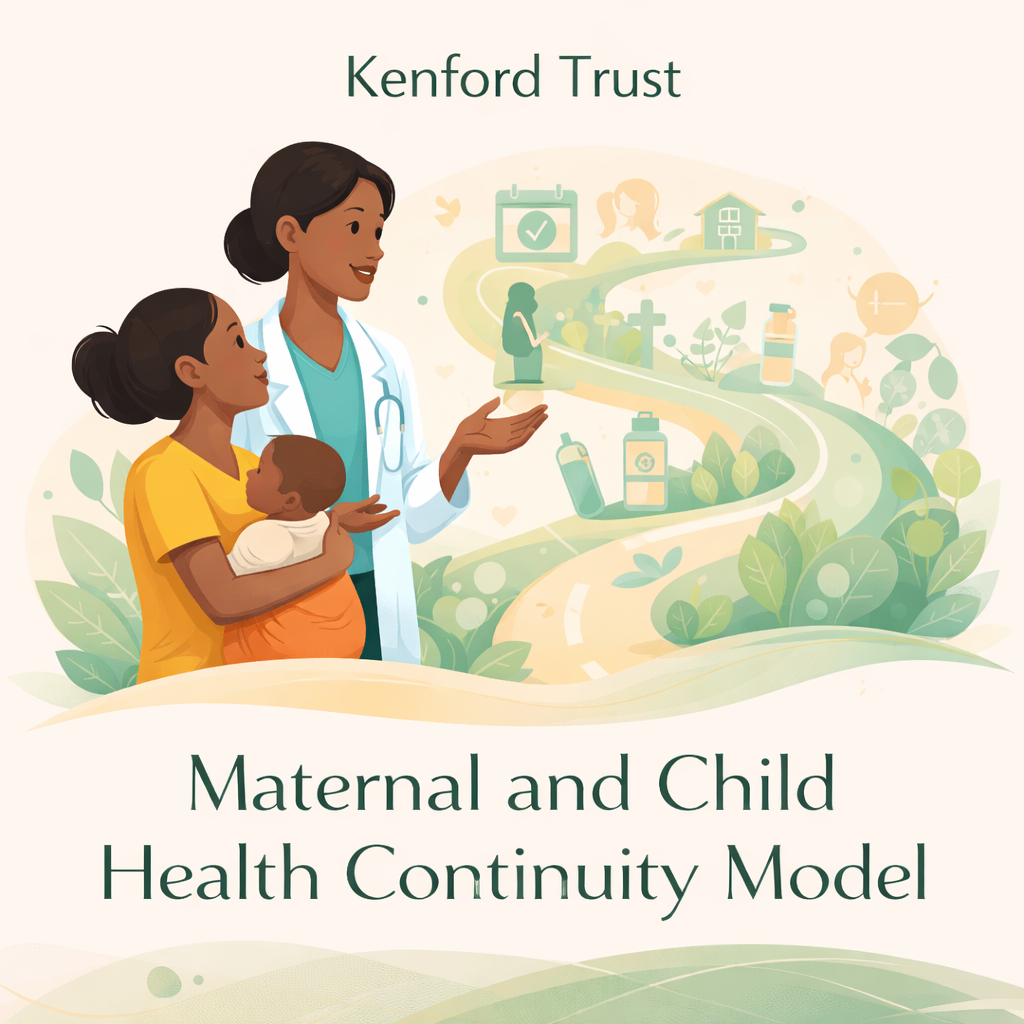
This model focuses on that continuity. From the first antenatal visit to early childhood development, every step is designed to connect to the next. The intention is simple. Care should not feel like separate events. It should feel like a clear and predictable path that families can follow without confusion or interruption.
The work begins by understanding how people actually live. In many cases, expectant mothers attend the first clinic visit, but repeat visits become harder as transport costs increase and responsibilities grow. Without planning for these realities, even well-designed programs lose momentum. Continuity must be built around daily life, not around ideal schedules.
Within communities, there are already strong support systems. Birth companions, caregivers, and local leaders often understand household dynamics better than formal systems do. When these individuals are connected to health facilities through clear referral pathways, they become active partners in ensuring that mothers complete their care journey. This connection turns encouragement into action.
Fathers also play an important role, even when they are not directly involved in care routines. In many settings, they are willing to support but lack clear guidance. When programs include them in practical sessions, support becomes more structured. Transport planning, follow-up reminders, and shared responsibility improve outcomes without adding complexity.
After delivery, another gap appears. Postnatal care is often misunderstood as optional, especially when there are no visible complications. This is where continuity breaks most frequently. Clear communication is required to show that postnatal checks are not just precautionary, but essential for both mother and child. When this understanding is reinforced at community level, follow-up improves.
This model focuses on that continuity. From the first antenatal visit to early childhood development, every step is designed to connect to the next. The intention is simple. Care should not feel like separate events. It should feel like a clear and predictable path that families can follow without confusion or interruption.
The work begins by understanding how people actually live. In many cases, expectant mothers attend the first clinic visit, but repeat visits become harder as transport costs increase and responsibilities grow. Without planning for these realities, even well-designed programs lose momentum. Continuity must be built around daily life, not around ideal schedules.
Within communities, there are already strong support systems. Birth companions, caregivers, and local leaders often understand household dynamics better than formal systems do. When these individuals are connected to health facilities through clear referral pathways, they become active partners in ensuring that mothers complete their care journey. This connection turns encouragement into action.
Fathers also play an important role, even when they are not directly involved in care routines. In many settings, they are willing to support but lack clear guidance. When programs include them in practical sessions, support becomes more structured. Transport planning, follow-up reminders, and shared responsibility improve outcomes without adding complexity.
After delivery, another gap appears. Postnatal care is often misunderstood as optional, especially when there are no visible complications. This is where continuity breaks most frequently. Clear communication is required to show that postnatal checks are not just precautionary, but essential for both mother and child. When this understanding is reinforced at community level, follow-up improves.
Caregivers of newborns often receive conflicting advice from multiple sources. This creates confusion and delays action when it matters most. Trusted local educators help resolve this by providing consistent, practical guidance that families can apply immediately. When advice is clear and aligned, confidence increases and risk reduces.
Nutrition and early childhood development follow the same pattern. Guidance is most effective when it reflects what families can realistically do. Linking advice to local food availability and household habits makes it actionable. When combined with simple developmental support such as play, communication, and monitoring, care becomes holistic rather than fragmented.
Nutrition and early childhood development follow the same pattern. Guidance is most effective when it reflects what families can realistically do. Linking advice to local food availability and household habits makes it actionable. When combined with simple developmental support such as play, communication, and monitoring, care becomes holistic rather than fragmented.
To support this, the system is structured around clear touchpoints. Each stage of care is defined and connected. Antenatal registration leads into birth preparation. Birth connects to postnatal follow-up. Postnatal care links directly into immunization and early development tracking. Nothing is isolated. Each step reinforces the next.
At the household level, care becomes more precise. Risk factors are identified early and followed consistently. Instead of waiting for complications, teams act early by maintaining simple care plans that guide follow-up. This approach shifts the system from reactive to proactive.
Community spaces also become part of the solution. Mother groups provide a setting where experiences are shared and guidance is reinforced. These spaces are not only educational but also supportive. They reduce isolation and help families stay engaged with care over time.
The connection between community teams and health facilities remains central. When a mother visits a clinic, that information should return to the community team. This feedback loop ensures that no case is lost. Continuity is maintained not only through intention, but through consistent tracking and communication.
As the model grows, it follows a clear progression. It begins with trust and alignment, ensuring that communities and facilities work together. It then strengthens delivery by integrating services into one continuous flow. Finally, it scales by learning from patterns, refining the approach, and expanding without losing quality.
Measurement is built into every stage. It is not enough to know how many people were reached. What matters is whether mothers complete antenatal visits, whether postnatal care is maintained, and whether children stay on track with immunization and development. These indicators show whether continuity is real or only assumed.
Sustainability comes from keeping the system practical. Local ownership ensures that activities continue beyond initial support. Costs are managed by focusing on simple, repeatable actions. Partnerships are structured so that each actor contributes clearly without duplication. Over time, the system becomes stable because it is embedded in the community itself.
Challenges remain part of the process. Fatigue, missed referrals, and inconsistent data can weaken continuity if not addressed early. The response is structured. Workloads are balanced, communication channels remain open, and data is reviewed regularly. Quality is maintained through consistency, not complexity.
The expected outcome is not only improved health indicators, but a shift in how care is experienced. Mothers complete their care journey with fewer interruptions. Children receive consistent monitoring and support. Families understand care as an ongoing process rather than a single event. Trust grows because the system works as expected.
Kenford Trust evaluates every part of this model with a simple question. Does this make it easier for families to stay connected to care over time. If the answer is no, it is adjusted. If the answer is yes, it is strengthened and expanded. The goal is not short-term improvement, but a reliable system that supports mothers and children from the beginning and continues without breaking.
Related Resources