
Education
Digital Literacy for Community Resilience: Skills, Safety, and Opportunity
Why digital literacy must include practical skills, online safety, and economic pathways to create real resilience for learners and families.
Kenford Trust approaches digital literacy as a practical life skill, not a technical specialization. In many communities, people interact with technology every day, yet struggle to use it in ways that improve learning, access services, or create opportunities. The gap is not access alone. It is the ability to use digital tools with confidence, safety, and purpose.
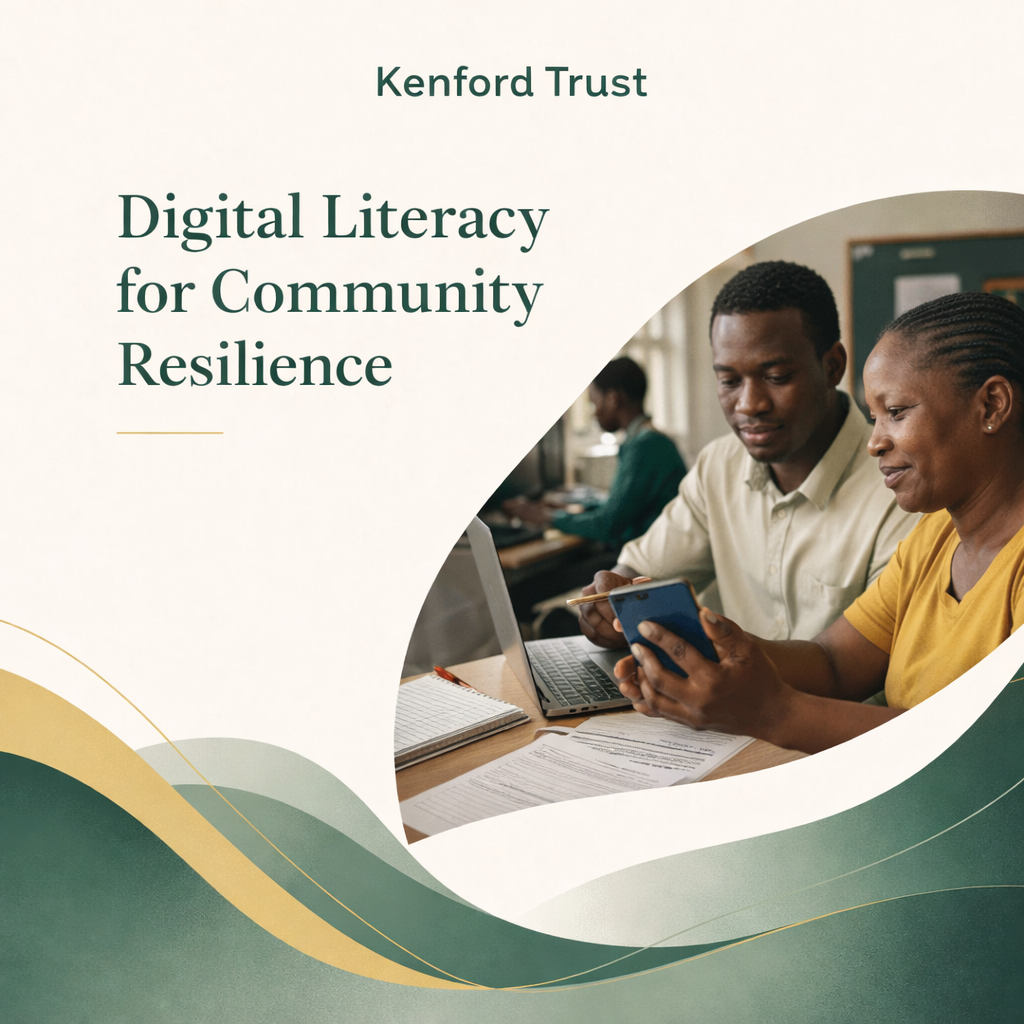
This work focuses on making digital skills useful in real life. Learners and caregivers are supported to move beyond basic phone use into structured tasks such as communication, research, and document creation. The goal is simple. Technology should make life easier, not more confusing.
The starting point is understanding how people already use digital tools. Many young people are active online but lack the skills needed for schoolwork or professional growth. Caregivers often depend on digital systems for services but feel excluded from them. Teachers may have access to tools but lack confidence in applying them in the classroom. These gaps shape how support is designed.
Communities already have trusted spaces where learning can happen. Schools, local groups, and mentorship circles become entry points for digital learning. When these spaces are equipped with simple, structured guidance, digital literacy becomes part of everyday activity rather than a separate program.
Safety is a central concern. As digital access increases, so do risks. Young people face misinformation, online harassment, and privacy threats. Without early guidance, these risks grow quickly. By introducing safety practices early, communities learn how to navigate digital spaces responsibly and confidently.
Learning is most effective when it produces something tangible. Instead of abstract lessons, learners work on practical outputs. They create simple documents, build small portfolios, and practice communication that reflects real-world needs. This approach connects learning directly to opportunity.
Teachers play a key role in this shift. With the right support, they can integrate digital tools into everyday lessons without adding complexity. Simple templates, clear routines, and peer support help teachers build confidence and maintain consistency.
Caregivers are also included in the process. When they understand how digital systems work, they are better able to support learners and engage with schools. This reduces the gap between school and home, making support more consistent.
In many settings, access to devices and connectivity is limited. This does not stop progress. Programs are designed to work with what is available. Shared devices, offline materials, and rotational learning models ensure that no learner is excluded. Practical solutions are prioritized over ideal conditions.
The system follows a continuous cycle. Learners are introduced to skills, they apply them in real tasks, progress is reviewed, and support is adjusted. This cycle ensures that learning is sustained and not forgotten.
As implementation continues, confidence begins to grow. Learners start to approach digital tasks with less hesitation. Teachers integrate tools more naturally into lessons. Caregivers become more comfortable engaging with digital platforms. These small shifts build a stronger system over time.
Measurement focuses on real capability. The question is not how many sessions were delivered, but whether learners can complete meaningful tasks independently. Can they communicate clearly, find reliable information, and use digital tools to solve problems. These indicators show whether learning is effective.
Sustainability is built through simplicity and ownership. Communities are supported to continue the work using low-cost tools and repeatable methods. Partnerships with schools and local organizations ensure that digital literacy remains part of everyday learning.
Challenges are expected. Device limitations, inconsistent connectivity, and varying skill levels can slow progress. These are addressed through flexible design, continuous support, and regular review. The system adapts based on what is working in practice.
The long-term outcome is not only improved digital skills, but stronger independence. Learners become capable of navigating digital environments with confidence. They are better prepared for education, work, and everyday tasks that increasingly rely on technology.
Kenford Trust evaluates this work using a clear standard. If people are able to use digital tools effectively, safely, and consistently in their daily lives, the system is working. If not, it is refined. The aim is to build a community where digital literacy supports opportunity, inclusion, and resilience.
Related Resources